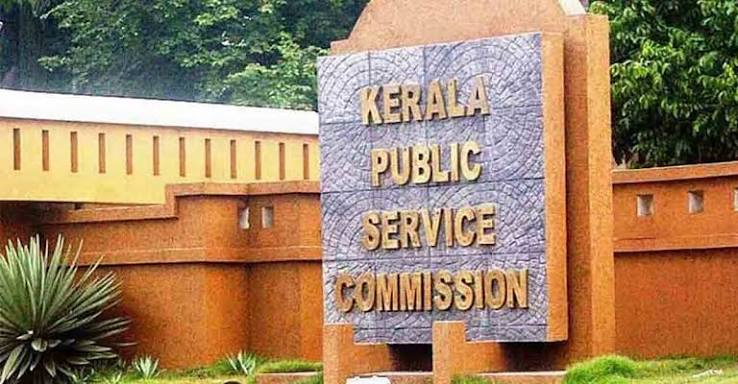
Kerala PSC Previous Year Question Papers: Where to Get Them and What Keeps Coming Back
By the EduPath faculty team, Kaloor, Ernakulam
Ask someone who has actually made it onto a Kerala PSC rank list how they prepared, and the answer is nearly always the same: they solved old papers, and they solved a lot of them. Not as a last-month revision trick, but from the first week.
There is a reason for that. The Commission sets thousands of questions every year, yet the syllabus does not change much, so the same ideas keep coming back in new clothes. An article number is asked with a different option set. A renaissance leader appears with a different founding date. A percentage problem swaps its numbers. If you have seen enough papers, these stop feeling like surprises.
This guide does two things. First, it tells you where to find real previous papers for the exams most of our students write. Second, it walks through the topics that, in our experience of teaching and marking practice papers, turn up in almost every cycle: the Constitution, Kerala's renaissance, basic science, arithmetic and reasoning.
Start with the official source
The Kerala Public Service Commission hosts its own archive of question papers. Whenever a paper is posted elsewhere, this is the version to trust for the question wording and the paper code:
A small practical tip. Many aspirants download papers from whichever site ranks first on Google and never check the code on the top corner. Match it against the Commission's list once. It takes a minute and saves you from studying an altered or partial copy.
The official page can be slow around exam season, and answer keys are not always attached to every paper. For that reason, many students also use collections maintained by exam-prep sites, which usually add marked answers. We list some below. They are third-party sites and EduPath does not run them, so treat the Commission's published answer key as final if the two ever differ.
Exam-wise download guide
Pick the exam you are writing and begin with the most recent papers. Links open the respective pages directly.
Want everything in one place? This collection page lists papers across many posts, including LDC, LGS, Civil Police Officer, Fireman, Civil Excise Officer, Khadi Board LDC and Devaswom Board LDC:
Answer keys for OMR tests have traditionally been published on the Commission's website after each exam. If you cannot find a key through the archive page, check the answer key section on keralapsc.gov.in directly.
What keeps repeating
Before the list, one honest note. We have not run a statistical count over every paper ever set, and we would be suspicious of anyone who claims an exact percentage. What follows comes from working through papers year after year with our own batches. The patterns are strong enough to plan your study around, and you should confirm them yourself using the tally method in the next section.
1. The Constitution: articles you should know by heart
Constitutional questions are rarely tricky. They test whether you have met the article before. A short list of articles covers a surprising share of them.
Pattern to notice: PSC likes to reverse the question. One paper asks which article abolishes untouchability; the next asks what Article 17 deals with. Learn both directions.
2. Kerala's renaissance and its leaders
This is the most reliable scoring area for Kerala candidates, because the material is compact and the questions are predictable. Almost every paper has two to four items from it.
- Sree Narayana Guru: the Aruvippuram consecration (1888), the line “one caste, one religion, one God for mankind”, SNDP Yogam (1903) and the Advaita Ashram at Aluva.
- Ayyankali: the villuvandi ride (1893) as a protest for the right to travel public roads, and the Sadhu Jana Paripalana Sangham (1907). The struggle for the right of Dalit children to enter schools is also asked often.
- Chattampi Swamikal and Vaikunda Swamikal: frequently paired in options. Vaikunda Swamikal founded the Samathva Samajam; Chattampi Swamikal wrote Vedadhikara Nirupanam.
- Sahodaran Ayyappan: the Misra Bhojanam (inter-dining) at Cherai in 1917 and the Sahodara Prasthanam.
- V. T. Bhattathiripad: the Yachana Yatra of 1929 and the play that exposed reform needs within the Namboothiri community.
- Other names to be ready with: Vakkom Moulavi, Pandit K. P. Karuppan, Mannathu Padmanabhan (NSS, 1914), Dr. Palpu, Kumaran Asan and Poykayil Yohannan.
- Movements and dates: Vaikom Satyagraha (1924), Guruvayur Satyagraha (1931 to 32) and the Temple Entry Proclamation, issued on 12 November 1936.
Pattern to notice: match-the-following questions pairing a leader with an organisation or a work. Make a two-column sheet and revise it weekly.
3. Basic science
PSC science stays at school level. You will not need derivations. You will need facts, and you will need them stated precisely.
- Vitamins and deficiency diseases: Vitamin A and night blindness, B1 and beriberi, C and scurvy, D and rickets, K and blood clotting. Nearly every paper has one.
- Human body: largest organ (skin), largest gland (liver), smallest bone (stapes in the ear), normal blood pH around 7.4.
- Physics basics: SI units, the unit of force (newton), Newton's laws, reflection and refraction, the need of a medium for sound.
- Chemistry basics: common names of compounds (baking soda, washing soda, quicklime), acids and bases, noble gases, rusting.
- Health and nutrition: iodine and goitre, iron and anaemia, balanced diet, common communicable diseases.
Pattern to notice: the question seldom goes beyond “which vitamin” or “which unit”. A one-page table that you re-read often will cover most of it.
4. Arithmetic
Arithmetic is where preparation separates people, because it rewards practice rather than memory. The same handful of chapters appear in nearly every paper: percentage, profit and loss, ratio and proportion, average, simple interest, time and work, and speed, distance and time.
Two habits help more than any shortcut trick. Memorise the basic conversions, such as km/h to m/s by multiplying with 5/18, and fraction-to-percentage equivalents up to 1/12. Then time yourself. Most students lose marks because one question took four minutes, not because it was hard.
5. Mental ability and reasoning
Number series, coding and decoding, odd one out, blood relations, direction sense, clocks and calendars. The format changes less than in any other section. If you solve ten past papers, you will have seen nearly every variation the Commission uses.
Here too, a good habit is to solve the question yourself before reading the explanation, even if you got it wrong. Reading solutions without attempting is the quietest way to waste study hours.
How to actually work through a paper
Downloading a paper and ticking boxes is not the same as using it. This is the three-pass method we suggest to our students.
- First pass, timed. Sit the paper in exam conditions with a timer and an OMR-style sheet. No phone, no notes. Your raw score matters less than your pace.
- Second pass, review. Go through every wrong answer and every lucky guess. Write the reason in one line: did not know, misread, calculation slip, or confused two options.
- Third pass, tally. In a notebook, keep a running count by topic. After eight to ten papers you will have your own analysis, and it will be more useful to you than any list, including ours.
Do the older papers last. Questions on current affairs and policy dates age quickly; the Constitution, renaissance and science questions do not.
Questions students ask us
Where can I download Kerala PSC previous question papers for free?
Begin with the Commission's own archive page. For a wider set with marked answer keys, use the exam-wise table above. All the links listed are free to open.
How many previous papers should I solve?
There is no magic number. Many of our students aim for at least ten of the most recent papers for their exam, plus selected older ones for topics they find weak. Quality of review matters more than count.
Are old question papers still useful if the syllabus has changed?
Yes, for the stable portions: Constitution, Kerala renaissance, science, arithmetic and reasoning. Check the latest notification and syllabus for your exam before you decide what to skip.
Do questions really repeat word for word?
Sometimes they do, often they come back rephrased or with changed options. Do not rely on seeing the identical question; rely on knowing the idea behind it.
Which paper should I start with?
The most recent one for your own exam. It reflects the current style, and it shows you honestly where you stand.
A closing word
Previous papers will not do the studying for you. What they do is tell you where to look, which is half the battle in an exam with a vast syllabus. Download a few, sit one this weekend under a timer, and keep the tally.If you would like a structured plan, regular model tests and someone to review your mistakes with you, our team at EduPath is happy to talk. You can reach us at www.edupathsolutions.com, call 9746349575, or visit us at Sree Muruga Building, Kaloor, Ernakulam, 682017.
CONTACT US
JOIN NOW